

مقالات آموزشی
Chabahar Port Smashes TEU Records

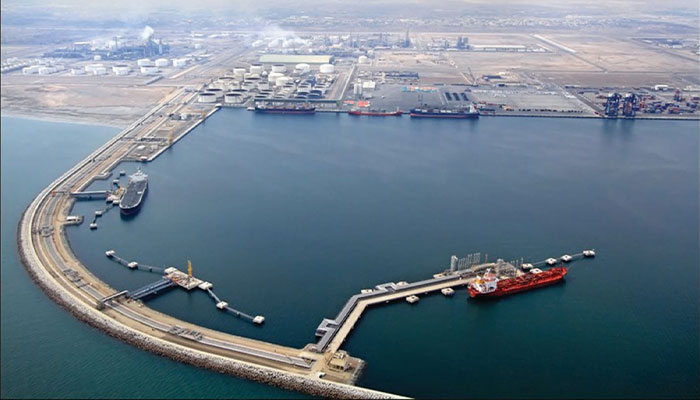
Chabahar Port Smashes TEU Records — A New Chapter in Iran’s Maritime Ambitions
In a stunning demonstration of growth and ambition, Chabahar Port — Iran’s only deep‑water oceanic port on the Sea of Oman — has delivered a record‑breaking performance in container throughput, firmly establishing itself as a rising star in global maritime trade.
According to data released by the Islamic Republic of Iran Shipping Lines (IRISL) in March 2025, TEU handling at Chabahar has surged dramatically. The port is on track to handle nearly 100,000 TEUs by the end of the current calendar year.
Similarly, an independent industry summary estimates that in 2024 the port processed approximately 90,800 TEUs, marking an impressive 83% increase compared to the previous year — a performance leap that underlines Chabahar’s growing importance in container logistics.
This explosive growth transforms Chabahar from a regional node into a major gateway for containerised trade linking South Asia, the Middle East, Central Asia and beyond.
🏗️ What’s Driving the Surge: Infrastructure, Investment & Strategic Vision
Several landmark developments and decisions have converged to fuel Chabahar’s meteoric rise:
- Heavy investment in port infrastructure and storage capacity — over 240 trillion rials (≈ US$480 million) have been allocated to modernize terminals, warehousing and logistics infrastructure, significantly increasing port capacity.
- Modern container‑handling equipment and facilities designed to manage large vessels — enabling Chabahar to accept mega‑ships and high‑volume container loads.
- Expansion of regular shipping lines — since September 2022, IRISL has ramped up its fleet calls at Chabahar, boosting container operations sharply compared to prior years.
- Strategic positioning as a regional hub — Chabahar is being primed to serve not only Iran, but also landlocked and transit markets in Central Asia, South Asia and Afghanistan, offering a stable and efficient alternative to routes via the Persian Gulf. In May 2025 alone, container throughput jumped by 33.8%, while transit‑cargo and transshipment volumes surged
Additionally, the volume of goods handled — both containerised and bulk — has seen consistent growth, reinforcing Chabahar’s role as a versatile and strategic port.
🌍 Why This Matters: Strategic, Economic, Regional Implications
The record‑breaking performance at Chabahar Port resonates far beyond pure numbers. Its implications encompass national strategy, regional trade, and geopolitical recalibration.
- A new maritime gateway for Iran — and beyond. With enhanced capacity, Chabahar can serve as a primary entry and exit point for trade flows between the Indian Ocean, Central Asia, South Asia and Europe. This transforms Iran’s southern coast into an economic lifeline and reduces reliance on older, more congested Persian Gulf ports.
- Boost for non‑oil trade and export diversification. Container growth opens the door for a wider range of goods — from consumer products to industrial materials — strengthening Iran’s ambitions to diversify away from oil.
- Transit corridor for landlocked and neighboring economies. Countries like Afghanistan and Central Asian states gain access to a dependable maritime outlet, which can cut costs, transit times and geopolitical dependence on other routes.
- Attractive platform for foreign direct investment and regional cooperation. The scale and upward trajectory of Chabahar make it a compelling hub for international shipping firms and logistics players eyeing emerging markets.
- A modern success story in maritime logistics under sanctions and challenging conditions. Despite economic headwinds, Chabahar’s rise demonstrates how strategic planning, infrastructure investment, and regional trade policies can overcome external pressures.
🔭 What’s Next: Ambitious Outlook and Further Expansion
Momentum shows no signs of slowing. Authorities and stakeholders are already looking ahead with ambitious targets and plans:
- Potential capacity increase toward 500,000 TEUs in the next few years, enabled by ongoing investments, expanded equipment and planned enhancements to connectivity — including rail links.
- Integration into broader regional transport corridors, especially as rail connections to hinterland regions (e.g. toward Zahedan and beyond) are activated, positioning Chabahar as a hub in the wider Eurasia‑India trade network.
- Diversification of traded goods, with potential for increased containerised exports/imports — from construction materials to consumer goods — leveraging the new warehousing capacity and streamlined logistics.
- Enhanced attractiveness for global shipping lines, as Chabahar’s infrastructure upgrade and strategic location meet rising demand for reliable, fast sea‑land transit routes connecting South Asia, the Gulf, Central Asia and Europe.
✨ Conclusion: Chabahar — From Strategic Hope to Maritime Reality
The surge in TEU throughput at Chabahar Port marks more than statistical growth — it heralds a transformation in the maritime and trade landscape of Iran and the wider region. From relatively modest beginnings, Chabahar has rapidly evolved into a dynamic, efficient, and strategically vital port.
With strong investments, modern infrastructure, regional cooperation and a clear long‑term vision, Chabahar is fast becoming the “silk route of the seas” — a logistical crown jewel that connects Indian Ocean trade flows to Central Asia, the Middle East, and beyond. The record-breaking 90,000+ TEU milestone isn’t just a number — it’s a statement of ambition, potential, and a new era in Iran’s maritime commerce.