

مقالات آموزشی
The Future of Maritime Safety with Garmin

Satellite Communication, SOS Systems, and the Road to 2026
The sea is majestic, powerful, and unforgiving. In moments of crisis, beauty fades and reliable communication becomes the single most critical factor between survival and loss. Over the past decades, Garmin has established itself as a global leader in marine electronics by redefining safety not as a luxury, but as an essential standard.
As the industry approaches 2026, Garmin Marine’s strategic focus has clearly shifted toward advanced satellite communication, intelligent SOS systems, and data-driven emergency response. This evolution signals not just product development, but a fundamental transformation in how safety at sea is designed, delivered, and trusted.
Satellite Communication: The Backbone of Modern Maritime Safety
In offshore and open-sea environments, terrestrial networks are unreliable or entirely unavailable. Satellite connectivity remains the only truly dependable communication channel. Garmin has long recognized this reality and continues to invest heavily in satellite-based solutions that go far beyond basic distress signaling.
Garmin’s next-generation marine satellite systems are designed to provide:
- Persistent connectivity beyond coastal limits
- Stable transmission in extreme weather conditions
- Continuous location tracking with high positional accuracy
By 2026, satellite communication within Garmin’s marine ecosystem is expected to function not merely as a backup, but as an always-on safety infrastructure.
SOS Reimagined: From a Button to an Intelligent Rescue Ecosystem
Traditionally, SOS systems served a single function: send a distress signal. Garmin has fundamentally redefined this concept. Modern Garmin SOS solutions are part of a multi-layered emergency response ecosystem, engineered to operate under extreme stress and limited human intervention.
Key characteristics include:
- Precise real-time GPS location transmission
- Two-way communication with rescue coordination centers
- Continuous status updates during emergencies
- Live tracking for coordinated rescue operations
This evolution ensures that emergency response is faster, more informed, and significantly more effective.
The Power of Real SOS Data
One of Garmin’s most distinctive advantages is its reliance on real-world SOS data, not theoretical assumptions. By analyzing thousands of actual emergency cases, Garmin gains insights into:
- Common maritime emergency scenarios
- User behavior under high-stress conditions
- Critical data points required by rescue teams
This data-centric approach allows Garmin to refine system logic, reduce activation complexity, and enhance reliability. Looking toward 2026, these insights will continue to shape smarter, faster, and more intuitive SOS technologies.
Compact, Efficient, and More Capable Satellite Devices
Another core development trajectory is hardware miniaturization combined with increased performance. Garmin’s marine satellite communicators are evolving to become:
- Smaller and easier to integrate onboard
- More energy-efficient for extended operations
- More resilient against harsh marine environments
These advancements are particularly valuable for fishing vessels, workboats, offshore cruisers, and long-range expeditions, where space, power consumption, and reliability are critical factors.
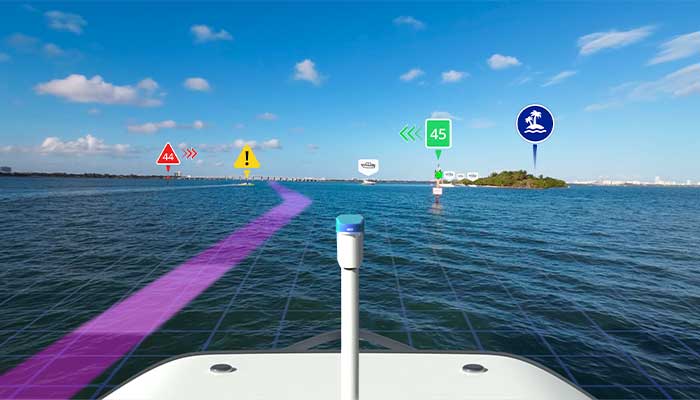
Seamless Integration with Marine Navigation Systems
Garmin’s strength lies in its fully integrated marine ecosystem. By 2026, satellite communication and SOS functionality are expected to be deeply synchronized with:
- Chartplotters
- Radar systems
- AIS
- Vessel management and monitoring platforms
In emergency situations, this integration enables:
- Real-time vessel positioning on digital charts
- Automatic transmission of navigational data
- Faster situational awareness for rescue authorities
This level of system convergence establishes a new benchmark for maritime safety technology.
Active Safety: Prevention Before Reaction
Garmin’s vision of safety extends beyond emergency response. The company is increasingly focused on active safety and risk prevention. By analyzing environmental conditions, vessel behavior, and navigational patterns, Garmin systems can:
- Identify potentially hazardous situations
- Issue early warnings to operators
- Reduce the likelihood of emergencies occurring
This proactive approach transforms safety from a reactive measure into a continuous protective process.
Sustainability and Responsibility in Marine Safety
Modern maritime safety is not only about technology but also responsibility. Garmin’s commitment to efficient power usage, durable hardware design, and long-term software support aligns with global sustainability goals. Reduced energy consumption and extended product lifecycles contribute to safer seas with a lower environmental footprint.
Why Garmin’s Direction Toward 2026 Matters
In an industry where many competitors prioritize feature quantity, Garmin prioritizes human life, reliability, and trust. The combination of:
- Satellite innovation
- Real-world data analytics
- User-centric design
- Ecosystem integration
positions Garmin not merely as a manufacturer, but as a strategic architect of the future of maritime safety.
Conclusion: Defining the Standard for Safer Seas
For Garmin Marine, 2026 is not defined by a single product launch. It represents the maturity of a long-term safety philosophy—one where:
- Communication never fails
- Assistance is never delayed
- Safety is not optional, but guaranteed
Through intelligent satellite communication and advanced SOS ecosystems, Garmin is shaping a maritime future that is not only smarter, but safer, more responsive, and more human-centered than ever before.